

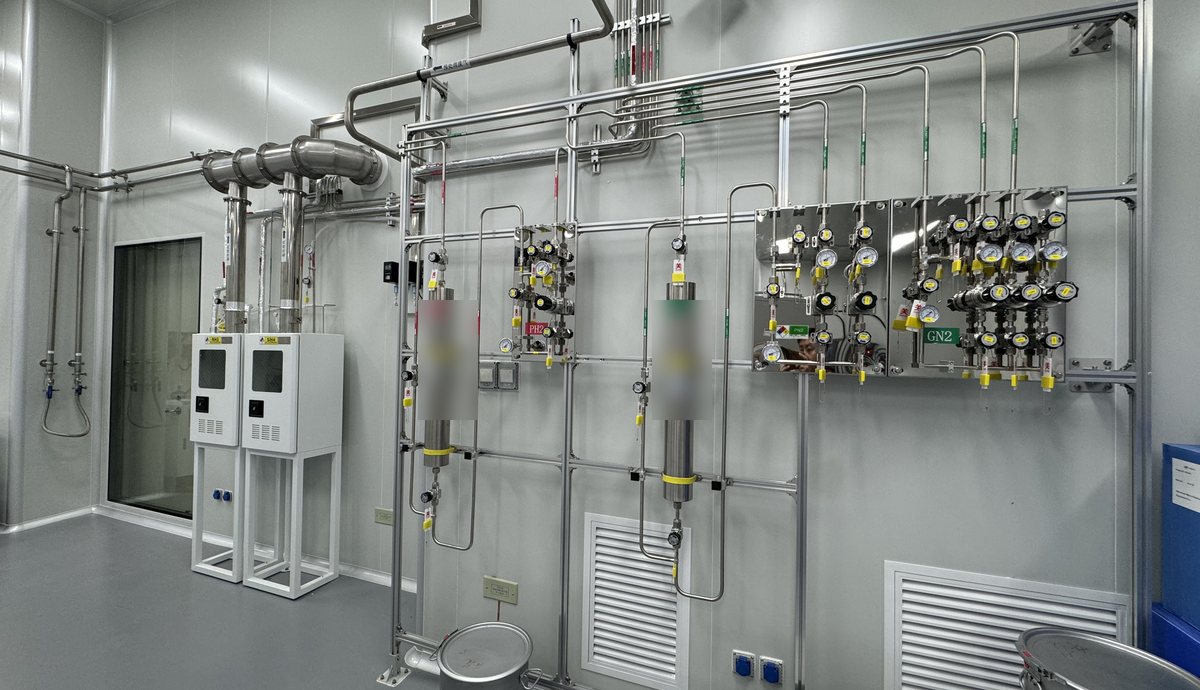
Summary: An ultra high purity gas delivery system is a gas supply in which every component, joint and procedure between the gas source and the process tool is chosen to keep impurities such as moisture, oxygen and particles at parts-per-billion levels. An ultra high purity (UHP) gas delivery system is built from an exhausted gas cabinet or bulk source, optional purifiers, orbital-welded electropolished 316L tubing, valve manifold boxes and a tool hook-up with metal diaphragm valves, filters and regulators.
The success of an ultra high purity gas delivery system depends on three decisions: an architecture that keeps dead volume and joints to a minimum, components specified with measurable purity properties, and acceptance criteria that are written before installation and proven by a defined qualification sequence. This guide explains each decision for semiconductor, compound semiconductor, research and analytical facilities.
What makes a gas delivery system ultra high purity?
A gas delivery system is ultra high purity when the gas arriving at the process tool still meets a purity target measured in parts per billion, not only when the cylinder contains a high grade gas. A 6.0 grade gas contains no more than 1 part per million of total impurities in the cylinder, but a single unsuitable regulator seat, a threaded joint or a poorly purged section can add more moisture, oxygen or particles than the gas itself contains.
Ultra high purity gas delivery systems are therefore defined by how they are built. Wetted surfaces are electropolished 316L stainless steel or vacuum arc remelted (VAR) 316L, regulators and valves use metal diaphragms instead of packing or elastomer seals, lines are joined by orbital welds or metal gasket face seals, and the whole system is assembled clean, helium leak tested, purged and measured before it carries process gas. The meaning of purity grades and the main contamination points are explained on our high purity and UHP gas system page.
Ultra high purity gas delivery systems are used for semiconductor and display process gases, compound semiconductor and MOCVD reactors, epitaxy and thin film research, trace analysis and some calibration services. The same design principles apply to toxic, pyrophoric and corrosive specialty gases, because a system that keeps air out also keeps hazardous gas in.
What is the architecture of a UHP gas delivery system?
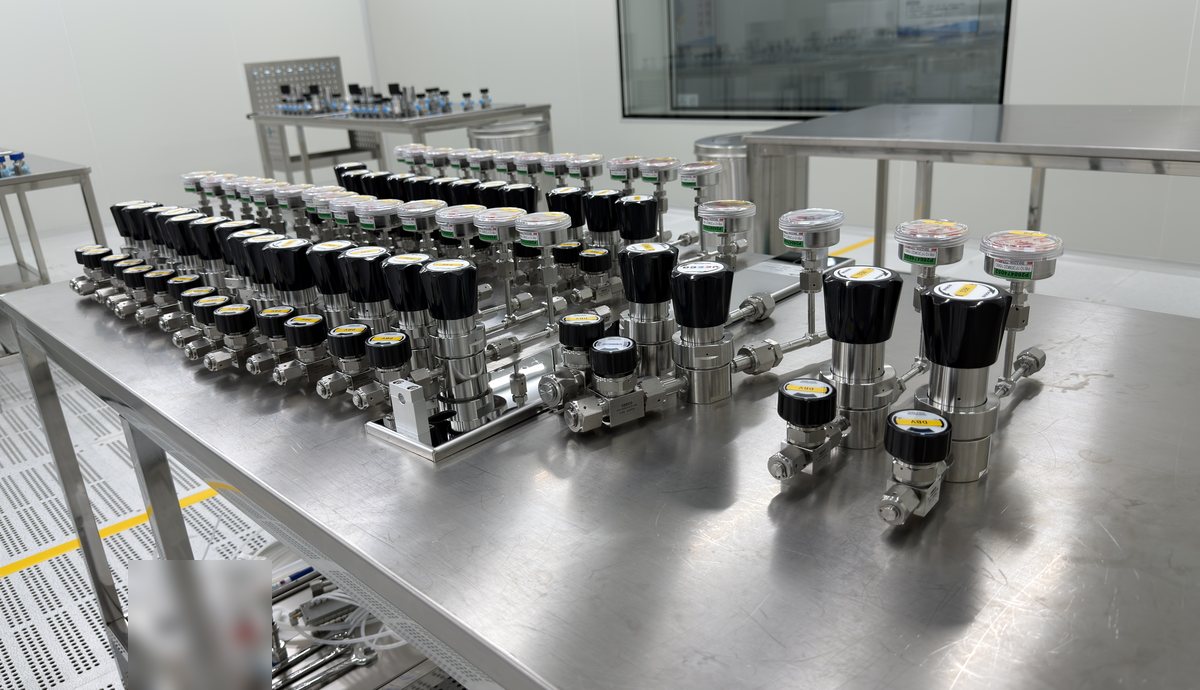
An ultra high purity gas delivery system has five sections between the gas source and the process chamber, and each section has its own purity risk. Designing the architecture first, before selecting components, keeps the number of joints, dead legs and internal volume as low as the process allows.
| Section | Function | Key purity and safety features |
|---|---|---|
| Source | Holds cylinders, bundles or a bulk specialty gas supply | Exhausted gas cabinet with purge panel, process and purge gas separation, automatic shut-off |
| Purification (optional) | Removes moisture, oxygen and other impurities from the source gas | Purifier matched to the gas and flow, bypass and isolation for replacement |
| Main distribution | Carries gas from the source to the tool area | Orbital-welded electropolished 316L tubing, minimal fittings, sloped and supported routes |
| Valve manifold box (VMB) | Splits one gas supply to several tools | Separate stick per tool with isolation, purge and vent, exhausted enclosure for hazardous gases |
| Tool hook-up | Connects each stick to the tool inlet | Point-of-use filter, final regulator where needed, metal diaphragm isolation valve, face seal connection |
Dead legs are the most common architectural fault in an ultra high purity gas delivery system. A dead leg is a branch or fitting in which gas does not flow during normal operation, so it collects moisture and particles and releases them later. Branches should be kept short, tees should be orientated so that flow sweeps through them, and unused branches should be capped close to the main line rather than left as long, closed spurs.
Gas segregation also starts with the architecture. Incompatible gases, such as oxidisers and flammables, need separate cabinets, separate VMBs and separate routes, and purge gas for hazardous gas panels should come from a dedicated purge source rather than from the general nitrogen line, so that hazardous gas cannot backflow into a shared supply. The valve manifold box page shows a typical stick arrangement.
How do you select UHP components?
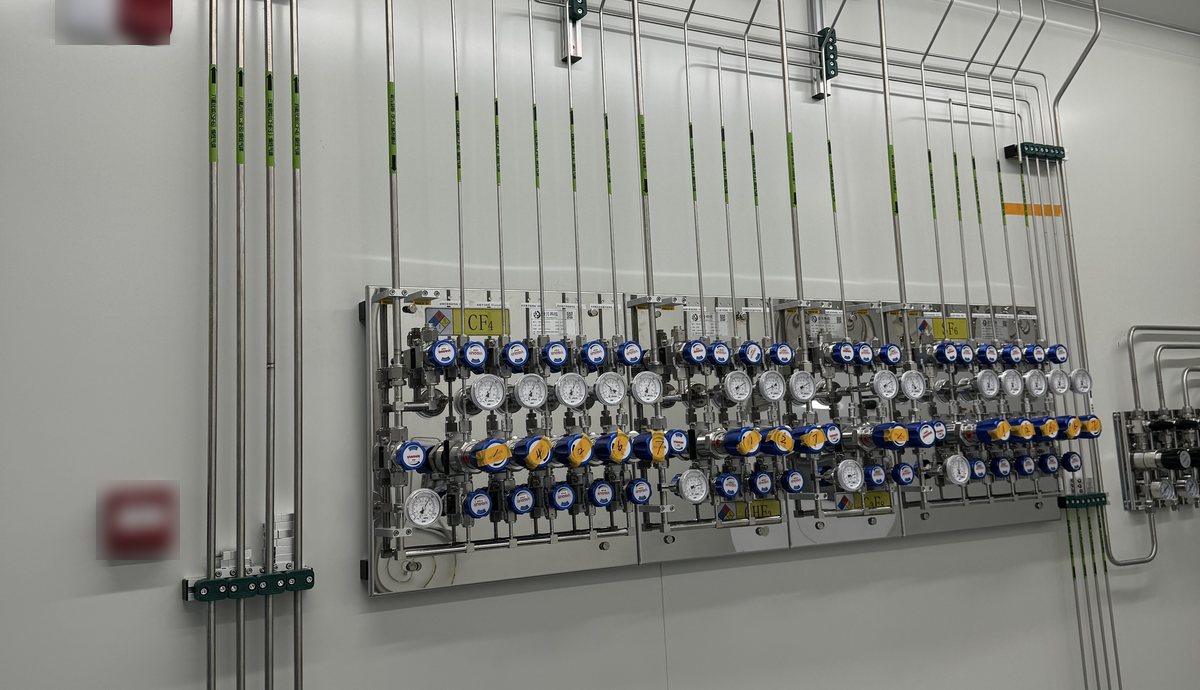
UHP components should be selected by measurable properties, not by the label "ultra high purity". Each component in an ultra high purity gas delivery system can be described by its wetted materials, internal surface finish, seal type, internal volume, leak rate and cleaning and packaging, and those properties should appear on the datasheet and in the purchase specification.
| Component | What to check |
|---|---|
| UHP regulators | 316L or VAR body, metal diaphragm, seat material compatible with the gas, low internal volume, Ra 5 µin (about 0.13 µm) electropolished wetted surfaces, single or dual stage, helium leak tested |
| Diaphragm valves | Packless metal diaphragm design, manual or pneumatic actuator, normally closed for hazardous gases, Cv suited to the flow, pressure rating for the cylinder or line side |
| Tubing | Electropolished 316L or VAR 316L for the process path, internal finish around 10 µin (0.25 µm) Ra or better, cleaned, capped and bagged until use |
| Fittings and joints | Butt weld fittings for orbital welding, metal gasket face seal glands where joints must be openable, no threaded joints in the process path |
| Filters | All-metal point-of-use filters with a stated particle retention rating and pressure drop at the design flow |
| Pressure measurement | Pressure transducers or UHP gauges with low internal volume; transducers allow remote monitoring and alarms |
Regulator selection has the largest effect on stability at the tool. A single stage UHP regulator suits steady inlet pressure, such as a line regulator downstream of a cabinet, while a dual stage regulator keeps delivery pressure stable as cylinder pressure falls and is preferred for cylinder-side regulation of low-flow specialty gases. A tied diaphragm design, in which the diaphragm is mechanically linked to the poppet, helps the regulator shut off positively.
Material grade matters most for corrosive and reactive gases. Standard electropolished 316L is suitable for most inert and many specialty gases, while VAR or VIM-VAR 316L has fewer inclusions at the surface and is often specified for corrosive gases such as hydrogen chloride or hydrogen bromide, where surface defects can start corrosion and particle generation. SEMI F19 describes the surface condition of wetted stainless steel surfaces and SEMI F20 describes 316L material for high purity components, and both are commonly referenced in UHP specifications.
When does a UHP gas delivery system need a purifier?
A purifier is needed when the process requires lower impurity levels than the source gas can reliably deliver, or when the cost of a purifier is lower than the cost of a higher gas grade. Point-of-use purifiers remove moisture, oxygen and other specified impurities close to the tool, so they also remove contamination picked up in the distribution system.
Purifier selection depends on the gas, the impurities to be removed, the flow and pressure, and the expected service life. A purifier installation should include isolation valves and a bypass or a redundant purifier so that replacement does not stop the tool, and should be followed by a filter if the purifier medium can release particles. Purifiers are consumables, so the replacement interval and cost should be part of the operating budget.
A purifier does not replace good installation practice. A purifier that is overloaded by moisture from an inadequately purged line or a leaking joint will reach the end of its life early, so purging, leak testing and dry-down must still meet their acceptance criteria before a purifier is put into service.
How do you write acceptance criteria for a UHP gas system?
Acceptance criteria for an ultra high purity gas delivery system should be written into the specification before installation starts, because a test without an agreed limit cannot be passed or failed. Each criterion should name the parameter, the test method, the measurement point, the conditions and the limit.
- Leak integrity: helium leak rate for each joint, component and the complete system, with the test method (inboard by vacuum or outboard by sniffing) and the detector sensitivity. UHP specifications commonly set leak rates in the region of 1 x 10⁻⁹ mbar L/s or lower for welded systems.
- Moisture and oxygen: concentration at the outlet, usually expressed in parts per billion, after a defined purge or flow period at a stated flow.
- Particles: number of particles above a stated size per unit volume of gas, measured at the outlet with a calibrated particle counter.
- Hydrocarbons, where relevant: total hydrocarbon content at the outlet for processes sensitive to organic contamination.
- Weld quality: weld procedure, coupon inspection and internal inspection method, such as borescope checks of a sample of welds, with criteria for bead shape and discoloration.
- Component documentation: material certificates linked by heat number, surface finish and cleaning records for wetted components.
Acceptance limits should be set by the process owner, not copied from another project. A research reactor and a production tool using the same gas may need different moisture limits, and setting limits tighter than the process needs increases test time and cost without improving results. The certifications and quality documents page explains what each record should contain.
What is the qualification sequence for a UHP gas system?
An ultra high purity gas delivery system is qualified in a fixed sequence, because each test assumes that the previous one has passed. Running a purity test on a system that has not passed its leak test, for example, only measures the leak.
| Step | What is done | Record |
|---|---|---|
| 1. Documentation review | Component certificates, weld logs and drawings checked against the specification | Document checklist |
| 2. Visual and weld inspection | Routes, supports, labels, weld coupons and internal weld samples inspected | Inspection report, weld log |
| 3. Pressure test | Each section held with clean dry inert gas above working pressure | Pressure, duration, result |
| 4. Helium leak test | Joints and components tested with a helium mass spectrometer | Method, sensitivity, measured rates |
| 5. Purge and dry-down | Cycle or flow purging with high purity inert gas until moisture falls to the target | Purge method, dew point or moisture readings |
| 6. Particle test | Particle counts measured at each outlet at the specified flow | Counts by size, sample volume |
| 7. Moisture and oxygen test | Impurity analysers connected at the outlets | Readings over time against limits |
| 8. Final report and handover | All results compiled with as-built drawings and certificates | Qualification package |
Cycle purging is the standard method for removing air and moisture from a new or opened UHP line. A section is pressurised with high purity inert gas and vented, repeatedly, so that each cycle dilutes the remaining contamination; the number of cycles needed depends on the pressure ratio and the target concentration. Our high purity gas system page shows the calculation, and the installation page describes how testing is organised on site.
What are the cost trade-offs in a UHP gas delivery system?
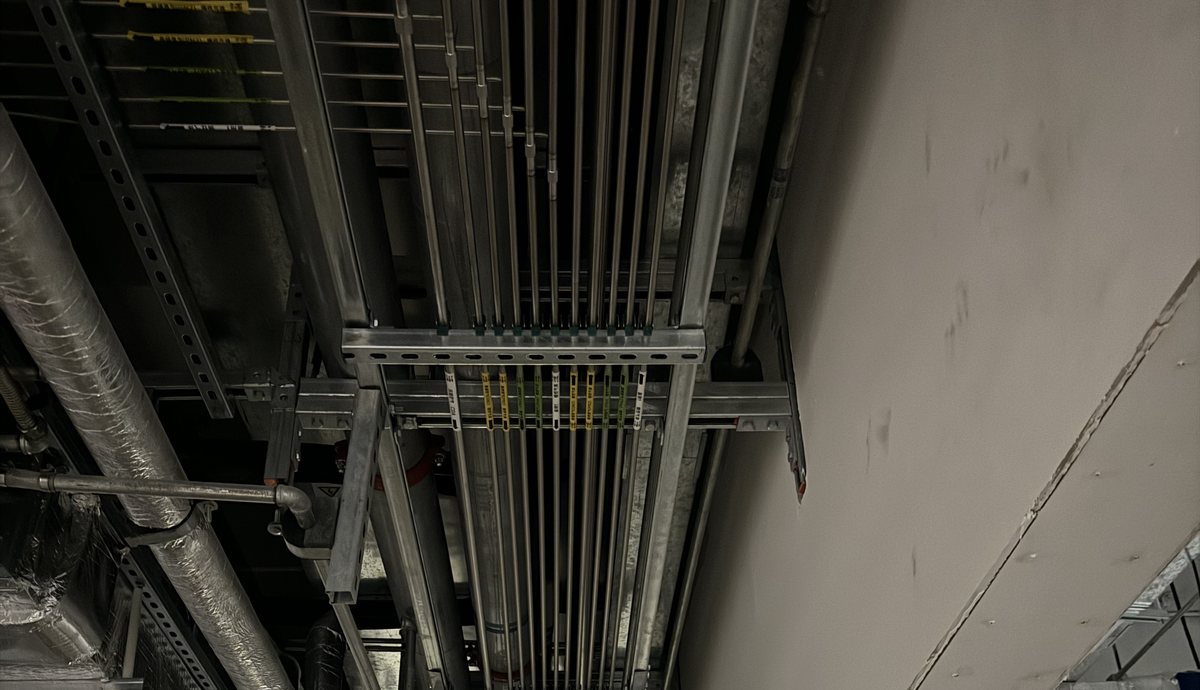
The cost of an ultra high purity gas delivery system is driven by a small number of choices, and each choice should be justified by the process rather than by habit. The comparisons below are the ones most often discussed during design reviews.
| Choice | Higher-cost option | Lower-cost option | When the higher-cost option is justified |
|---|---|---|---|
| Tubing material | VAR or VIM-VAR 316L | Standard electropolished 316L | Corrosive gases and the most sensitive processes |
| Joining | Orbital welding throughout | Face seal joints at more positions | Long runs, hazardous gases and lines that are rarely opened |
| Purity strategy | Point-of-use purifiers | Higher grade source gas only | Processes that need lower impurities than the source can guarantee |
| Changeover | Fully automatic cabinet with purge sequences | Semi-automatic or manual cabinet | Continuous production, hazardous gases, unattended operation |
| Testing | Particle, moisture and oxygen tests at every outlet | Helium leak and purge records only | Production tools and processes with documented purity limits |
The cheapest way to control UHP cost is to apply UHP only where it changes the result. A building that runs a few UHP process lines and many utility gas lines should specify UHP construction for the process lines and laboratory-grade construction for the utilities, rather than one specification for everything.
When is an ultra high purity gas delivery system not needed?
An ultra high purity gas delivery system is not needed for most laboratory utility gases and for many analytical carrier gases. Nitrogen for purging equipment, compressed air, carbon dioxide for incubators and general purpose argon can be supplied with laboratory-grade line regulators, ball valves and compression fittings, while gas chromatography and ICP carrier gases usually need high purity, not ultra high purity, construction.
Over-specifying a line as UHP has real costs. UHP components, orbital welding, cleanroom assembly and purity testing increase price and lead time, and UHP construction can make later modifications slower because every new joint must be welded and requalified. Specifying by purity class, as described in the laboratory gas delivery system guide, avoids paying UHP prices for utility gases.
How do you keep a UHP gas system at specification?
An ultra high purity gas delivery system loses purity mainly when it is opened, so every cylinder change and every modification needs a defined procedure. Cylinder connections should be purged with inert gas through the cabinet purge panel before and after each change, and the purge sequence should be automated wherever the cabinet allows it.
- Cylinder changes: follow the cabinet's purge sequence, check the new connection for leaks and record the cylinder and lot number.
- Line modifications: isolate, purge and cap the section, weld or connect under inert gas purge, then repeat the leak test, purge and the purity tests for the affected outlets.
- Periodic checks: leak check accessible joints, test gas detectors and shut-off valves, and replace filters and purifiers at the specified intervals.
- Records: keep drawings, test records and component certificates up to date, so that every change can be traced.
Training is as important as hardware for a UHP system. The technicians who change cylinders and the engineers who modify lines should understand why each purge step exists, because a skipped purge is the most common cause of a purity excursion after handover.
What are the most common UHP mistakes?
- Buying components by label. "UHP" on a datasheet means little without materials, finish, seal type and leak rate.
- Long dead legs. Unused branches left long and closed release moisture and particles for months.
- Threaded joints in the process path. Sealant and crevices undo the purity of welded lines.
- Acceptance criteria written after installation. Limits must be agreed before work starts.
- Testing out of sequence. Purity results mean nothing until leak tests have passed.
- Shared purge gas for hazardous gas panels. Purge supplies for toxic and pyrophoric gases should be dedicated.
- Opening lines without a procedure. Every opened section needs purge, leak check and requalification.
Frequently asked questions
What is the difference between high purity and ultra high purity gas systems?
A high purity gas system protects carrier, calibration and research gases with 316L tubing, high purity regulators and suitable fittings. An ultra high purity gas system goes further, with electropolished or VAR 316L wetted surfaces, metal diaphragm components, orbital welds or face seals throughout, helium leak testing and measured purity at the outlet.
Why are diaphragm valves used in UHP gas systems?
Diaphragm valves are used in UHP gas systems because a metal diaphragm separates the gas from the actuator, so there is no packing or sliding seal in contact with the gas. The design gives very low leak rates, low particle generation and a small internal volume that purges quickly.
Is orbital welding always required for UHP lines?
Orbital welding is the standard joining method for UHP distribution lines because it produces a smooth, crevice-free internal surface. Metal gasket face seal joints are used where a joint must be opened for maintenance, such as at components and tool connections, and threaded joints are avoided in the process path.
How is the purity of a UHP gas system measured?
The purity of a UHP gas system is measured at the outlets after leak testing and purging, using moisture and oxygen analysers that report in parts per billion and particle counters that count particles above a stated size per unit volume. The limits, flow and test duration are set in the project acceptance criteria.
Do UHP gas systems need gas cabinets?
UHP gas systems need exhausted gas cabinets for toxic, pyrophoric, corrosive and most flammable gases, which provide ventilation, purge, detection and automatic shut-off. Inert UHP gases can be supplied from open gas panels or bulk systems, although many facilities use cabinets for all process gases to standardise purge procedures.
How often should a UHP gas system be requalified?
A UHP gas system should be requalified for the affected section after every modification or opening of the gas path, and periodically according to the facility's quality plan. Routine checks of leak integrity, detectors, shut-off valves, filters and purifiers keep the system at specification between requalifications.
Specify and build your UHP gas delivery system with LGS
LGS supplies UHP regulators, diaphragm valves, gas cabinets, valve manifold boxes and welded 316L pipelines, and designs, installs and qualifies complete ultra high purity gas delivery systems for semiconductor, compound semiconductor, research and analytical facilities. Send your gas list, purity targets and tool layout to info@labgassystem.com, and our engineers will propose the architecture, components and qualification plan.
Explore more on the LGS website: high purity and UHP gas systems, UHP regulators, UHP diaphragm valves, semiconductor applications and installed projects, or contact our engineering team.