

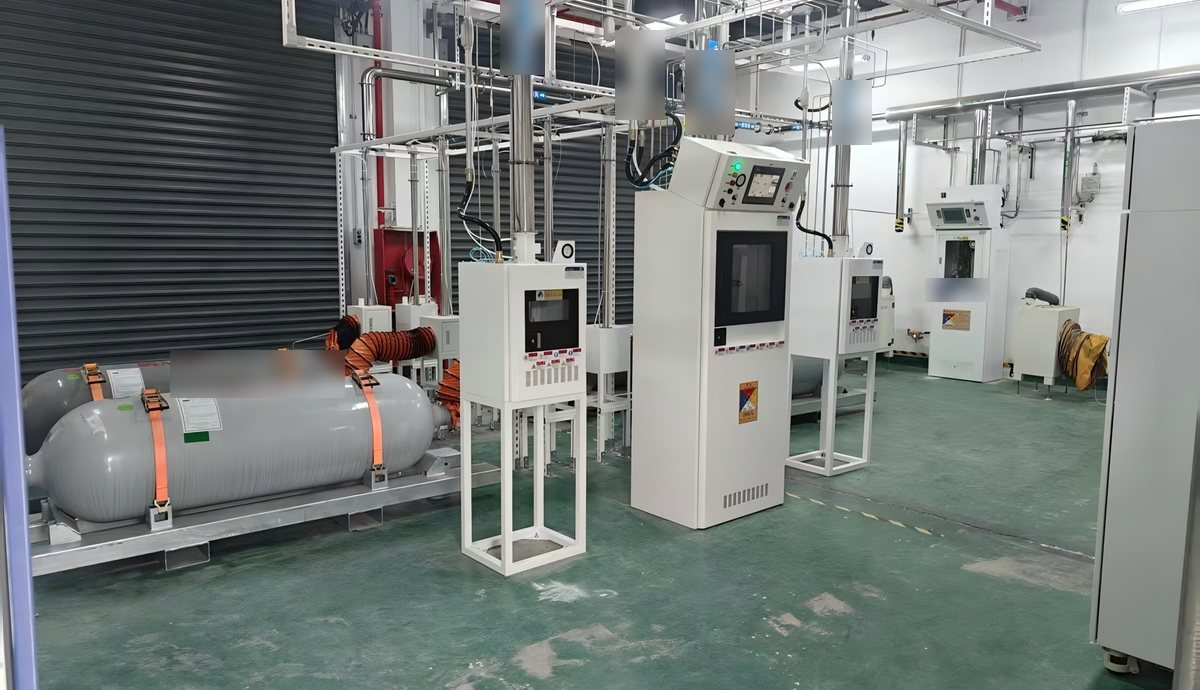
Summary: A laboratory specialty gas handling system is the equipment that stores, controls and distributes hazardous and high purity specialty gases safely: exhausted gas cabinets at the source, valve manifold boxes (VMBs) that split one gas to several tools, and bulk specialty gas systems (BSGS) when flow is too high for single cylinders. A laboratory gas cabinet contains cylinders and the gas panel in a ventilated enclosure with purge, detection and automatic shut-off, so a leak is drawn into exhaust instead of the room.
Planning a specialty gas handling system means choosing the enclosure by gas hazard, sizing cabinets, sticks and bulk sources for the real flow, defining the interlocks that shut gas off, arranging exhaust, purge gas and vent treatment, laying out the gas room or sub-fab, and testing everything at the factory and on site. This guide covers each step and lists what to include in the specification.
- What a specialty gas handling system is
- Gas cabinet, VMB or BSGS
- Choosing the enclosure by gas hazard
- Sizing cabinets, sticks and bulk sources
- Controls and interlocks
- Exhaust, purge gas and vent treatment
- Gas room and sub-fab layout
- Factory and site acceptance tests
- Specification checklist
- Operation and maintenance
- Common mistakes
- FAQ
What is a laboratory specialty gas handling system?
A laboratory specialty gas handling system is the part of a gas delivery system that deals with gases which are toxic, pyrophoric, corrosive, flammable, oxidising or required at ultra high purity. Typical specialty gases include silane, ammonia, chlorine, hydrogen chloride, hydrogen bromide, boron trichloride, nitrogen trifluoride, nitrous oxide and hydrogen, used in semiconductor, compound semiconductor, photovoltaic, display, battery and advanced materials research.
A specialty gas handling system has three main building blocks. The gas cabinet holds one to three cylinders and the gas panel that regulates, purges and isolates them. The valve manifold box receives gas from the cabinet and splits it into individually controlled sticks, one per process tool. The bulk specialty gas system replaces cylinders with larger containers, such as cylinder bundles or tube trailers, when many tools use the same gas. Exhaust from cabinets and tools may then pass through a gas scrubber or other treatment before release.
All three building blocks share one safety principle: hazardous gas should always be inside a closed, exhausted and monitored volume, and any abnormal condition should close the gas source automatically. The equipment ranges are summarised on the gas supply and safety page.
Should you use a gas cabinet, a VMB or a BSGS?
A gas cabinet, a valve manifold box and a bulk specialty gas system do different jobs, and most specialty gas installations use at least two of them in series. The table compares their roles so that each can be specified for the right position in the gas path.
| Item | Gas cabinet | Valve manifold box (VMB) | Bulk specialty gas system (BSGS) |
|---|---|---|---|
| Position | Gas source | Between source and tools | Gas source for high demand |
| Main job | Contain cylinders, regulate, purge, shut off | Split one gas to several tools with independent isolation | Supply high, continuous flows from large containers |
| Typical capacity | 1 to 3 cylinders | 4, 6 or 8 sticks | Cylinder bundles or tube trailers |
| When it is needed | Any hazardous gas, and many UHP process gases | One gas serving several tools or chambers | Many tools on one gas, frequent cylinder changes |
| LGS examples | JW-300-GC, JW-200-GC | JW-VMB, semi-automatic VMB cabinet | JW-300-BSGS, BSGS cabinet |
A single research tool using one hazardous gas usually needs only a gas cabinet with a direct line to the tool. A shared cleanroom with several tools on the same gas needs a gas cabinet feeding a VMB. A production line with high, continuous consumption needs a BSGS feeding one or more VMBs, so that the tools are not limited by cylinder size or change frequency.
How do you choose the enclosure by gas hazard?
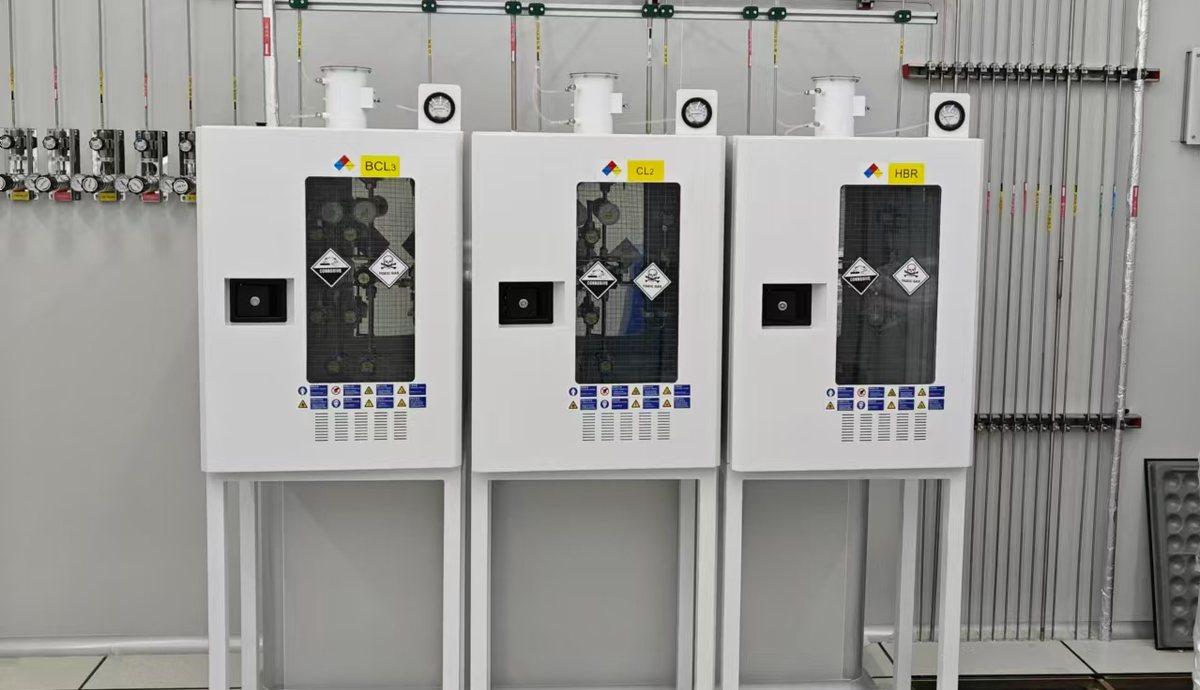
The enclosure for each specialty gas is chosen by its hazard class, and the hazard class also decides detection, materials and the shut-off logic. Gases with the same hazard can often share a room, while incompatible gases, such as oxidisers and flammables, must be separated by distance, fire-rated barriers or separate cabinets.
| Hazard class | Example gases | Typical enclosure and protection |
|---|---|---|
| Inert and asphyxiant | Nitrogen, argon, helium | Open gas rack or panel in a ventilated room, oxygen depletion monitoring |
| Flammable | Hydrogen, methane, propane | Ventilated cabinet or room, flammable gas detection, excess flow protection, ignition source control |
| Toxic and corrosive | Ammonia, chlorine, hydrogen chloride, hydrogen bromide, boron trichloride | Exhausted gas cabinet, toxic gas detection inside and outside, excess flow valve, automatic shut-off, corrosion-resistant materials |
| Pyrophoric | Silane | Exhausted gas cabinet with automatic purge and shut-off, flow restriction, additional fire protection measures required by the applicable code |
| Oxidising | Nitrous oxide, nitrogen trifluoride, oxygen | Cabinet or ventilated area segregated from flammable gases, oxygen-compatible materials and cleaning |
Open gas racks are lighter, cheaper and easier to service than cabinets, so they suit inert gases that do not need an enclosure. The JW-300-GR automatic gas rack is an example. Hazardous gases should not be moved from a cabinet to an open rack to save cost, because the enclosure, exhaust and detection are what limit the consequence of a leak.
Codes for specialty gases vary between countries. In the United States, NFPA 55 covers the storage and use of compressed gases, and SEMI S2 is widely used as the safety guideline for semiconductor equipment, including gas cabinets. The applicable code and the site's insurer should be confirmed before the enclosure strategy is fixed.
How are gas cabinets, VMB sticks and bulk sources sized?
A gas cabinet is sized by the number of cylinder positions it needs for continuous supply. A one-cylinder cabinet suits low consumption where a short stop for cylinder change is acceptable. A two-cylinder cabinet gives duty and reserve positions with automatic changeover, so the tool keeps running while the empty cylinder is replaced. A three-cylinder cabinet adds a dedicated purge gas cylinder for the purge panel, or a third process cylinder for higher demand.
A valve manifold box is sized by the number of tools or chambers it serves, plus spare capacity. VMBs are commonly supplied with 4, 6 or 8 sticks; one spare stick, fitted and capped or ready to be fitted, is usually cheaper than adding a second VMB when a tool is added later. Each stick needs its own isolation, purge and vent functions so that one tool can be serviced while the others continue.
A bulk specialty gas system becomes the better choice when cylinder changes are frequent enough to create risk and downtime. Every cylinder change opens the gas path, needs a purge sequence and is a point of potential exposure, so reducing the number of changes improves both safety and purity. A BSGS is typically justified when many tools use the same gas continuously; the bulk specialty gas system page describes the architecture and filtration.
Flow and pressure must be checked at the peak, not the average. The cabinet regulator, the VMB stick regulators and the lines between them must deliver the highest simultaneous tool demand at the required pressure, and the excess flow protection must be set above that peak but below a flow that would indicate a broken line.
Which controls and interlocks does a gas cabinet need?
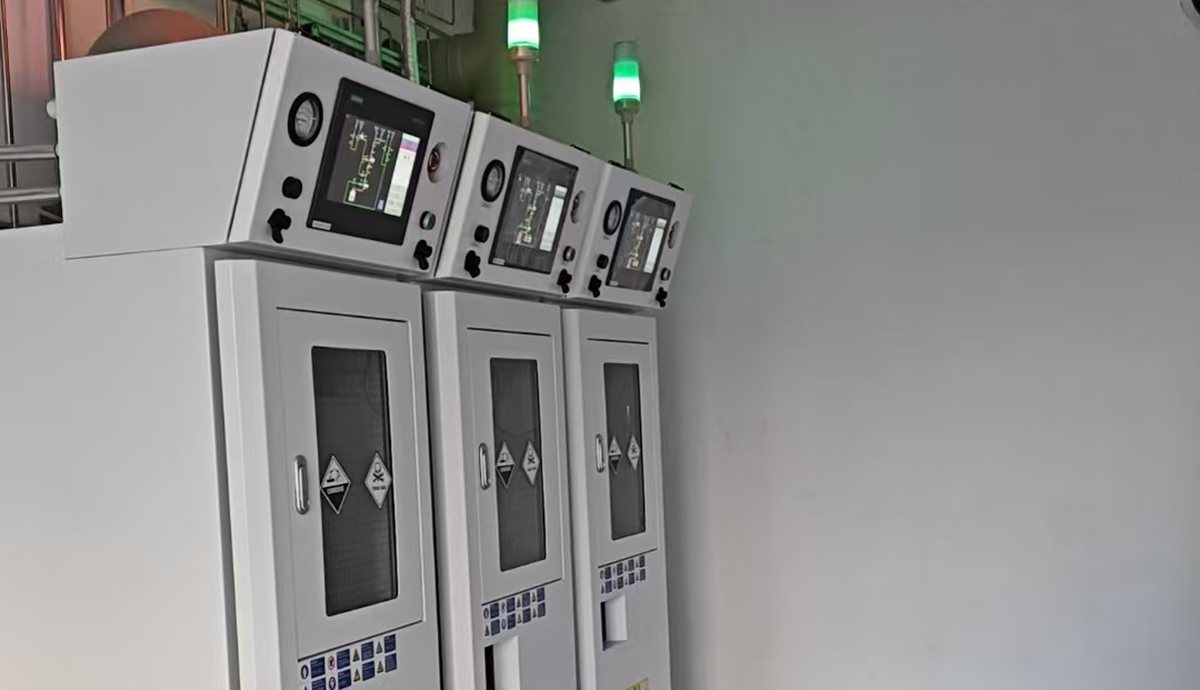
A specialty gas cabinet controller performs two jobs: it runs the purge and changeover sequences, and it closes the gas source automatically when a hazard is detected. The interlocks below are typical for toxic, pyrophoric and corrosive gases; the exact list is set by the hazard review for each gas.
| Event | Typical automatic response |
|---|---|
| Gas detected inside the cabinet or room | Close the cylinder valve and process isolation valves, alarm locally and remotely |
| Exhaust failure or low exhaust flow | Alarm and close the gas source after a defined delay |
| Excess flow | Close the source; indicates a broken line or open fitting downstream |
| High or low pressure | Alarm; close the source if limits indicate a regulator failure |
| Emergency stop or fire alarm | Close all gas sources served by the controller |
| Cabinet door open during operation | Alarm, and inhibit sequences that would expose the operator |
| Purge sequence fault | Stop the sequence and keep the cylinder isolated until reset |
Automatic cabinets reduce operator exposure because the controller runs every purge and changeover step in the same order every time. A fully automatic cabinet such as the JW-300-GC runs PLC-controlled purge sequences and changeover with leak, exhaust and remote shut-off functions, while a semi-automatic cabinet such as the JW-200-GC guides the operator through the same steps. Status signals should be repeated to the facility monitoring system so that alarms reach someone at night and at weekends.
How are exhaust, purge gas and vent treatment arranged?
Exhaust is the primary safety function of a gas cabinet, because the enclosure only protects people if air is continuously drawn through it. Each cabinet and VMB enclosure should have a dedicated exhaust connection with continuous flow or pressure monitoring, and the exhaust system should be on emergency power where the gases are toxic or pyrophoric. LGS cabinet exhaust requirements typically fall in a range of about 204 to 810 cubic metres per hour, depending on cabinet size and configuration.
Purge gas for hazardous gas panels should come from a dedicated source, such as a purge cylinder in the cabinet, rather than from the general nitrogen supply. A dedicated purge source prevents hazardous gas from flowing back into a shared line if a valve fails, and keeps the purge gas purity under the control of the cabinet. Many cabinets also use a vacuum generator to evacuate the cylinder connection during purge sequences.
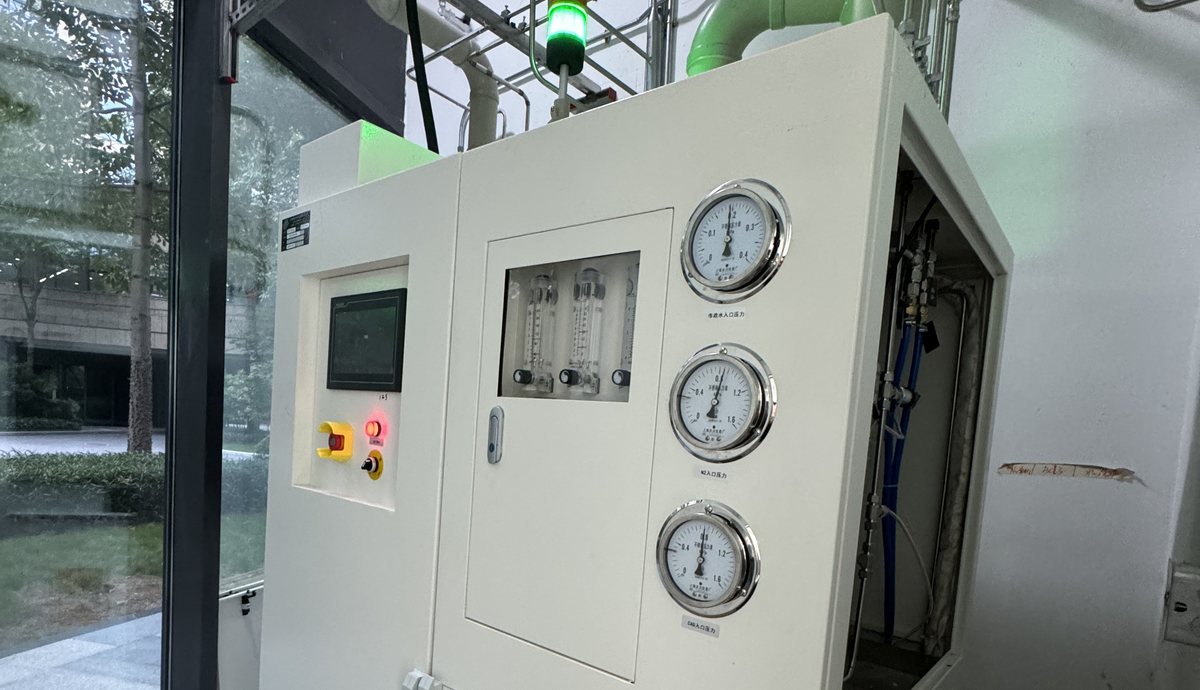
Vent lines from purge panels and VMB sticks carry small amounts of process gas and must be routed to the appropriate treatment, not into the room or the general exhaust without treatment. Toxic and corrosive gas vents and exhaust are commonly treated in a scrubber or abatement system before release, and the treatment capacity should be checked against the worst-case release from the largest cylinder.
How should a specialty gas room or sub-fab be laid out?
A specialty gas room or sub-fab should be laid out so that cylinders can be delivered, changed and removed safely, and so that incompatible gases are separated. Gas cabinets are usually placed along walls with clear working space in front for cylinder trolleys, with exhaust ducts above and gas lines leaving from the top of the cabinet.
- Access: a level route from the delivery point, doors wide enough for cylinders or bundles, and space to turn a cylinder trolley in front of each cabinet.
- Segregation: flammable and oxidising gas cabinets separated, toxic gases grouped with their own detection, and pyrophoric gases arranged according to the applicable code.
- VMB position: close to the tools they serve, to keep stick lines short, with access for maintenance from the front.
- Detection and alarms: gas detectors inside cabinets and in the room, alarm beacons and horns at the entrance, and status panels outside the room.
- Future capacity: spare cabinet positions, spare exhaust connections and spare VMB sticks, because specialty gas lists grow as processes develop.
What is tested at the factory and on site?
A specialty gas cabinet or VMB should be tested twice: a factory acceptance test (FAT) before shipment and a site acceptance test (SAT) after installation. The FAT proves that the assembly is built and programmed correctly; the SAT proves that it works with the building's exhaust, power, detection and monitoring.
| Test | Factory acceptance test | Site acceptance test |
|---|---|---|
| Pressure and leak | Each panel pressure tested and helium leak tested | Field joints and connections leak tested |
| Controller | Purge, changeover and shut-down sequences run and recorded | Sequences repeated with real purge and process gas connections |
| Interlocks | Each input simulated and each response checked | Real detectors, exhaust switches, emergency stops and fire alarm inputs tested |
| Exhaust | Not applicable | Exhaust flow measured and low-flow alarm proven |
| Monitoring | Signal outputs checked | Alarms received by the facility monitoring system |
| Documentation | Test records, settings, drawings | Commissioning records, as-built drawings, training records |
Customers can witness the factory acceptance test in person or by video. The production and test process for LGS cabinets and panels is described on the factory and quality page, and the UHP qualification sequence is explained in the ultra high purity gas delivery system guide.
What should a specialty gas handling specification include?
A specification for a laboratory specialty gas handling system should give every supplier the same information, so that the offers can be compared and the equipment can be built without assumptions. The checklist below covers the items that most often change price and lead time.
- Gas list with gas, grade, cylinder or container type and valve connection for each gas
- Peak and normal flow and delivery pressure for each tool or chamber
- Number of tools per gas, and required VMB sticks including spares
- Changeover level: manual, semi-automatic or fully automatic, and whether a purge cylinder is required
- Required interlocks, detector types and signal outputs to the facility monitoring system
- Wetted materials, surface finish and leak rate requirements for UHP and corrosive gases
- Exhaust, power and emergency power available at the cabinet positions
- Vent and exhaust treatment arrangement, and the interface to any scrubber
- Applicable codes and safety guidelines, and the site's own standards
- FAT and SAT scope, documentation and training required at handover
How are gas cabinets and VMBs operated and maintained?
A specialty gas handling system stays safe only if cylinder changes, detector checks and interlock tests follow written procedures after handover. Most incidents with gas cabinets happen during cylinder changes, when the gas path is opened, so the change procedure deserves the most attention in training.
- Cylinder changes: only trained staff change cylinders, using the cabinet's purge sequence before disconnection and after connection, a new gasket on every face seal connection, and a leak check before the cylinder valve is opened fully.
- Gas detectors: calibrated and bump tested at the intervals set by the detector manufacturer and the site safety plan, with records kept for each detector.
- Interlocks: exhaust failure, gas detection, excess flow and emergency stop functions tested periodically, not only at commissioning.
- Consumables: purge cylinders, filters and pigtails inspected and replaced at defined intervals, because a worn pigtail is a common leak point.
- Records: cylinder changes, alarms, tests and modifications logged, so that trends such as repeated low-pressure alarms are noticed early.
Spare parts and service access should be planned at the purchase stage. Keeping common spares, such as pigtails, gaskets, filters and detector sensors, on site shortens downtime, and a supplier that builds the cabinets and VMBs can supply matching parts and support changes when tools are added.
What are the most common specialty gas handling mistakes?
- Shared purge nitrogen. Purge gas for hazardous panels taken from the general nitrogen line can be contaminated by backflow.
- Exhaust without monitoring. A cabinet whose exhaust has failed is only a box; exhaust flow must be monitored and interlocked.
- Excess flow set too high. An excess flow setting far above peak demand will not detect a broken line.
- Incompatible gases side by side. Oxidisers and flammables need separation by distance, barriers or separate enclosures.
- No spare sticks or positions. Process gas lists grow; spare VMB sticks and cabinet positions avoid costly changes later.
- Alarms that stay local. Gas and exhaust alarms must reach the people who respond outside working hours.
- Interlocks tested only at the factory. Real detectors, exhaust switches and fire alarm inputs must be proven on site.
Frequently asked questions
What is the difference between a gas cabinet and a gas rack?
A gas cabinet is a closed, exhausted enclosure that contains cylinders and the gas panel, with detection and automatic shut-off, and is used for hazardous gases. A gas rack is an open frame that holds cylinders and the gas panel, is lighter and easier to service, and is used for inert gases that do not need an enclosure.
What does a valve manifold box do?
A valve manifold box takes one specialty gas supply from a gas cabinet or bulk system and divides it into several sticks, each feeding one tool or chamber. Each stick has its own isolation, purge and vent functions, so one tool can be serviced while the others keep running.
When is a bulk specialty gas system (BSGS) needed?
A bulk specialty gas system is needed when many tools use the same specialty gas continuously and cylinder changes become frequent. A BSGS supplies gas from larger containers such as cylinder bundles or tube trailers, which reduces the number of cylinder changes, the related exposure risk and downtime.
Does every hazardous gas need its own gas cabinet?
Every toxic, pyrophoric or corrosive gas should be supplied from an exhausted gas cabinet, and incompatible gases should never share one. A cabinet may contain more than one cylinder of the same gas, for duty and reserve supply, together with a purge gas cylinder.
Why does a gas cabinet need a dedicated purge gas?
A gas cabinet needs a dedicated purge gas so that hazardous process gas cannot flow back into a shared nitrogen line if a valve fails, and so that the purity of the purge gas is controlled. Purge gas is usually supplied from a purge cylinder inside the cabinet or from a dedicated purge line.
Can gas cabinets be connected to the building monitoring system?
Gas cabinets can be connected to the building monitoring system through signal outputs or a network interface. Typical signals include gas leak alarms, exhaust failure, low cylinder pressure, changeover status and emergency shut-off, so that alarms reach staff outside the gas room.
Plan your specialty gas handling system with LGS
LGS designs and manufactures gas cabinets, gas racks, valve manifold boxes and bulk specialty gas systems, and installs and commissions complete specialty gas handling systems for cleanrooms, research laboratories and production lines. Send your gas list, tool layout and flow requirements to info@labgassystem.com, and our engineers will propose the enclosures, interlocks and layout for your facility.
Explore more on the LGS website: gas cabinets and racks, valve manifold boxes, bulk specialty gas systems, semiconductor applications and installed projects, or contact our engineering team.