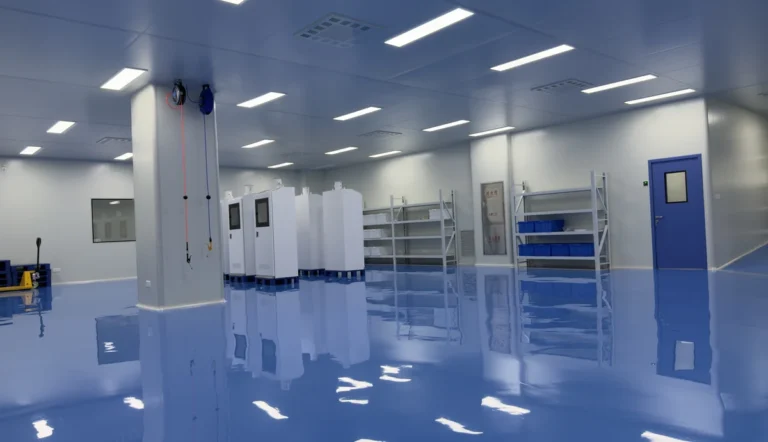

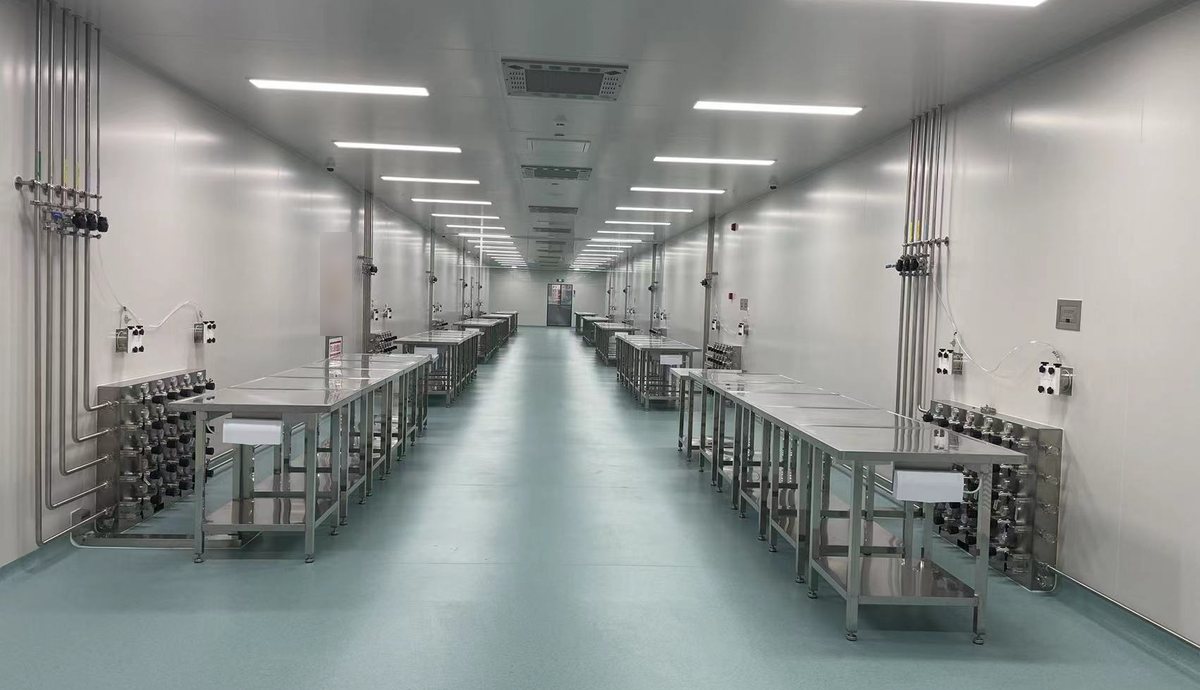
Summary: A laboratory gas delivery system is the equipment that takes gas from its source, such as cylinders, bulk tanks, generators or gas cabinets, and delivers it to each instrument at the correct pressure, purity and flow, safely and without interruption. Every laboratory gas delivery system is built from six stages: source, changeover, pressure regulation, distribution, isolation and point-of-use control, with gas detection and shut-off around the whole path.
A laboratory gas delivery system is planned from the instrument backwards: list what each instrument needs, size lines for peak demand, choose materials by purity class, contain hazardous gases, and prove every section by test before gas is introduced. This guide explains each decision and what to ask a supplier before you buy.
- What a laboratory gas delivery system is
- The six stages of the gas path
- Cylinders, bulk supply or on-site generators
- Central supply or point-of-use supply
- Matching equipment to purity
- Planning steps and sizing rules
- Safety and codes
- Installation, testing and handover
- Operating and maintaining the system
- What drives cost
- What to include in a request for quotation
- How to choose a supplier
- FAQ
What is a laboratory gas delivery system?
A laboratory gas delivery system, also called a lab gas supply system, is the complete arrangement that stores, switches, regulates, distributes and isolates gases between their source and the instruments or processes that use them. A small analytical laboratory may need only two cylinders, a changeover manifold and a few metres of stainless steel tubing, while a research building or semiconductor cleanroom may need a central gas room, exhausted gas cabinets, valve manifold boxes, long welded high purity pipelines and dozens of point-of-use panels.
Every laboratory gas delivery system has three jobs, whatever its size. The first job is purity: gas must reach the instrument as clean as it left the cylinder, which depends on every regulator, valve, joint and metre of tube in between. The second job is continuity and stability: supply must not run out overnight, and pressure at the instrument must stay steady as cylinders empty and other users switch on. The third job is safety: flammable, toxic, corrosive, oxidising and asphyxiant gases must be contained, detected and shut off, and staff must be able to change cylinders without risk.
Most laboratory gas problems are failures of one of those three jobs. A gas chromatograph sequence that stops because a cylinder ran empty is a continuity failure. A calibration that drifts because two instruments share one regulator is a stability failure. A cleanroom tool that waits because its gas line cannot be certified clean is a purity failure.
What are the six stages of a laboratory gas path?
Every laboratory gas delivery system follows the same six-stage path from source to instrument. Each stage is handled by a specific family of laboratory gas equipment, and the families must be matched to each other in pressure rating, purity class and connection type.
| Stage | Purpose | Typical equipment |
|---|---|---|
| 1. Source | Stores the gas in cylinders, cylinder bundles, bulk liquid tanks or on-site generators | Gas cabinets, gas racks, bulk specialty gas systems |
| 2. Changeover | Switches from an empty duty source to a full reserve source without interrupting supply | Changeover manifolds, automatic changeover panels |
| 3. Regulation | Reduces source pressure in stages to a stable line pressure | UHP regulators, pressure control panels |
| 4. Distribution | Carries gas through the building to each room and bench | High purity tubing and weld fittings, compression fittings |
| 5. Isolation and flow | Isolates sections, switches gases, prevents backflow and filters particles | Diaphragm valves, ball, needle and check valves, filters |
| 6. Point of use | Sets the final pressure each instrument needs | Line regulators, gas sticks, gauges |
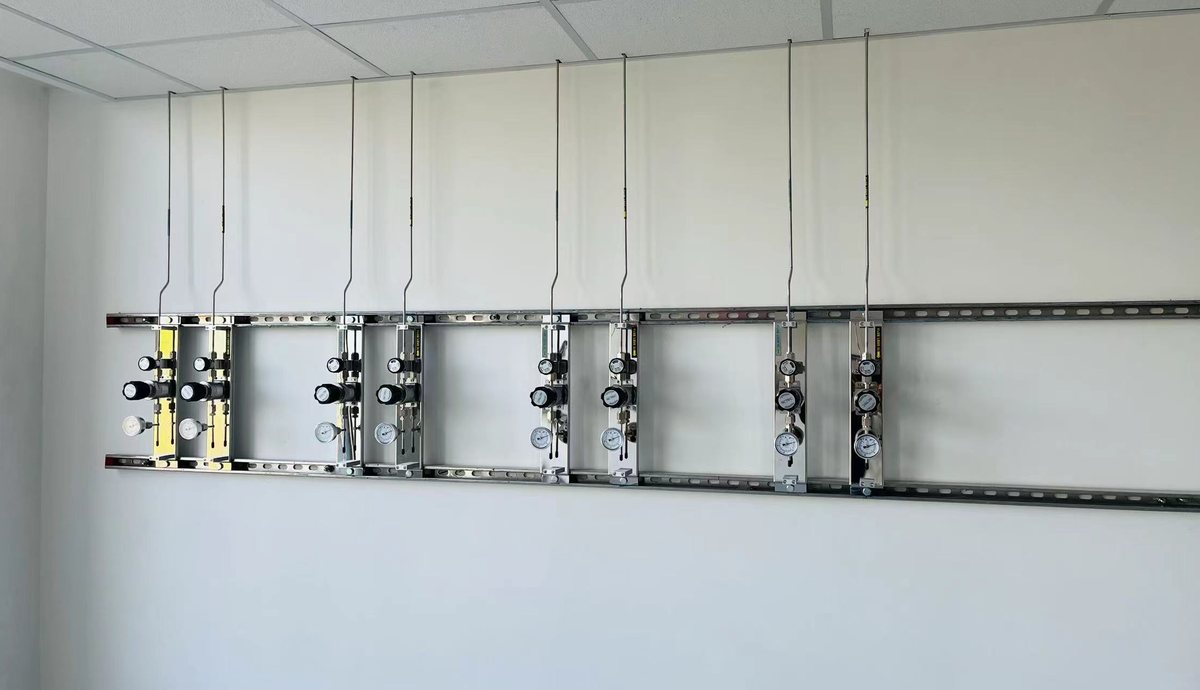
Pressure regulation in a laboratory gas delivery system is done in stages rather than in one step. A first-stage regulator at the source reduces cylinder pressure, typically up to 3000 psig (about 200 bar), to a distribution pressure, and a final-stage regulator at the point of use sets the pressure each instrument needs. Staged regulation keeps delivery pressure steady as cylinders empty and stops one instrument's demand from disturbing another. For toxic, flammable and pyrophoric gases used at low flow, a dual-stage regulator holds delivery pressure steady from a full cylinder to an almost empty one.
The distribution network is the part of a laboratory gas delivery system that contains most of the joints, so its material and joining method largely decide how clean and leak-tight the whole system will be. Lines should be supported and labelled along their full length, with isolation valves at every boundary: gas room, riser, floor, room and bench. At the end of each line, a point-of-use panel or gas stick gives every instrument its own regulator, gauge and shut-off valve, so no two instruments share a regulator.
Should a laboratory use cylinders, bulk supply or on-site generators?
The gas source for each gas is chosen by consumption, hazard and how continuous the supply must be. High-pressure cylinders suit low and moderate consumption and almost any gas; bulk liquid tanks suit very high consumption of nitrogen, argon or oxygen; on-site generators suit steady demand for nitrogen, hydrogen or zero air close to the instruments. Many buildings combine all three, gas by gas.
| Source | Best suited to | Advantages | Limitations |
|---|---|---|---|
| Cylinders and bundles | Specialty gases, calibration mixtures, low to moderate flows | Any gas and grade, low starting cost, simple to add | Handling and storage, changeovers, rental cost, batch-to-batch variation |
| Bulk liquid tank with vaporiser | High, continuous consumption of nitrogen, argon or oxygen | Low cost per unit of gas, few deliveries, large reserve | Outdoor space, supplier contract, needs cylinder backup for maintenance |
| On-site generator | Steady demand for nitrogen, hydrogen or zero air near instruments | No cylinder logistics, small stored inventory, continuous supply | Higher capital cost, maintenance, limited pressure and purity range, power required |
A generator is not automatically the safer or cheaper option for every laboratory. A generator stores little gas, which reduces the consequence of a leak, but it needs power, space, servicing and a backup plan for maintenance. The decision should compare annual gas use, cylinder rental, delivery and handling cost, and the cost of an interruption, rather than the purchase price alone.
Is a central laboratory gas supply system better than point-of-use cylinders?
A central laboratory gas supply system moves cylinders out of the laboratories into a ventilated gas room, where changeover manifolds feed pipelines to every laboratory. Central supply removes cylinder handling from benches and corridors, lets cylinders be emptied more fully before return, allows deliveries without entering laboratories and makes automatic changeover practical for every critical gas. Our central laboratory gas supply system page describes typical gas room layouts.
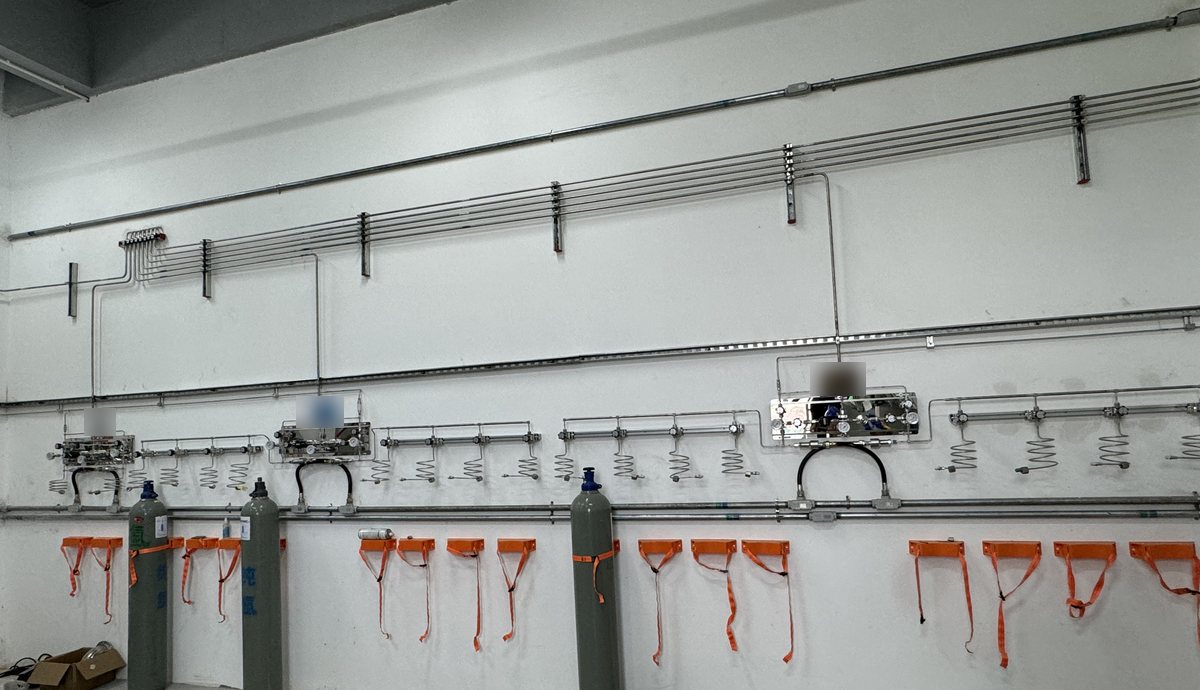
Point-of-use cylinders still suit small laboratories with one instrument per gas, gases used in very small amounts, and gases that are only needed for a short project. Point-of-use supply is simple and cheap to install, but each cylinder needs a safe and secured position, takes laboratory space and still needs a changeover plan if the instrument must not stop.
Most buildings use a hybrid arrangement: a central supply for gases used in several rooms, point-of-use cylinders or generators for single-instrument gases, and exhausted gas cabinets for hazardous gases. Standardised modular and point-of-use panels make every room look and work the same way, which reduces operator error.
How do you match laboratory gas equipment to the purity you need?
Not every gas line needs ultra high purity equipment, so a laboratory gas delivery system should be specified by purity class. The most demanding services set the specification for their own lines, while utility gases use simpler and more economical components, which keeps the budget where it changes results.
| Purity class | Typical services | Recommended equipment |
|---|---|---|
| Ultra high purity (UHP) | Semiconductor process gases, toxic and corrosive specialty gases, trace analysis | Electropolished 316L or VAR components, UHP regulators, diaphragm valves, orbital welds and face seals, gas cabinets and VMBs |
| High purity | GC, GC-MS and ICP carrier gases, calibration gases, research gases | 316L tubing, high purity regulators and panels, diaphragm or ball valves, compression or face seal fittings, in-line filters |
| Laboratory and utility | Nitrogen, compressed air, CO2 and general laboratory services | Line regulators, gas sticks, ball valves, compression fittings, manual or semi-automatic changeover |
The joining method is the single most important purity decision in a laboratory gas pipeline. Each threaded joint needs sealant and leaves a crevice, each compression joint has a small annular volume, and each orbital weld or metal gasket face seal leaves a smooth, continuous internal surface. Welded and face seal joints are therefore standard for UHP lines, while compression fittings give a reliable and serviceable system for carrier and laboratory gases. Our high purity and UHP gas system page covers materials and testing for these lines.
The valve type is the second most important purity decision. Packed ball and needle valves are excellent for isolation and flow control in utility service, but their packing touches the gas. Diaphragm valves isolate the gas completely from the valve stem, so diaphragm valves are the standard choice on UHP lines and on lines carrying toxic or corrosive gases.
What are the planning steps and sizing rules?
A laboratory gas delivery system is planned in six steps: a gas audit with the users, a supply strategy for each gas, a layout of the gas room and main routes, engineering of line sizes, pressures and materials, a safety review for each gas, and a design package that can be built or tendered. The step-by-step method is explained in our lab gas system design guide; the rules below are the ones that most often change the price and performance of a project.
- Start with a gas audit, not a list of gas names. For each instrument, record the gas and grade, normal and peak flow, required inlet pressure, the cost of an interruption and expected future additions.
- Size for peak simultaneous demand. Start-ups, purges and evaporators create flow peaks that can coincide, so each branch is sized from the peak simultaneous flow agreed with the users. A common rule of thumb is to add 20 to 50 percent for future growth and to keep pressure drop along the longest route to about 10 percent of the supply pressure.
- Avoid oversizing high purity lines. A larger line holds more internal volume to purge and dry, so the goal for UHP service is the smallest line that meets the peak.
- Set pressures from the instrument upwards. Add the point-of-use regulator requirement and the route pressure drop to each instrument's inlet pressure, then set the distribution pressure with a margin, and only then fix the source pressure.
- Place the gas room early. A gas room drawn into left-over space is usually too small, too far away or lacks delivery access; gas room location, riser space and main routes should be fixed while the building layout can still change.
Pressure staging and line sizing for multi-room buildings are covered in more depth on our laboratory gas distribution system page.
How is a laboratory gas delivery system made safe?
Safety measures in a laboratory gas delivery system should match the hazard of each gas. Over-engineering an inert gas line wastes money, while under-engineering a toxic gas supply is unacceptable, so each gas is reviewed for what could go wrong, how it would be detected and how it would be stopped.
- Prevent: use materials and pressure ratings compatible with the gas, secure every cylinder and use gas-specific connections that cannot be mixed up.
- Limit: keep inventories small in occupied areas and fit excess flow valves or flow restrictors.
- Contain: supply toxic, pyrophoric and most flammable gases from exhausted gas cabinets, and keep large inventories in ventilated gas rooms with gases segregated by hazard class.
- Detect: install gas monitors for toxic and flammable gases, and oxygen depletion monitors wherever inert gases or cryogenic liquids could displace air.
- Respond: connect alarms to automatic shut-off valves, and agree alarm routing so that someone receives the alarm at night and at weekends.
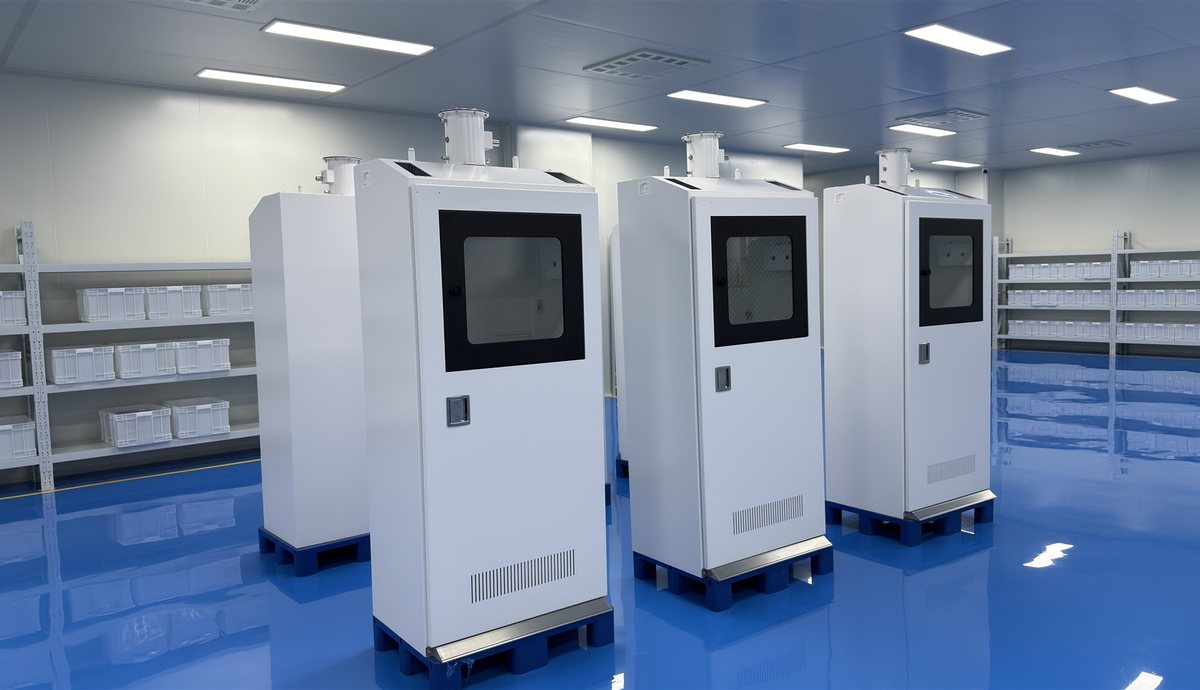
Hazardous specialty gases such as silane, ammonia and hydrogen chloride are supplied from exhausted gas cabinets with purge panels, gas detection and automatic shut-off, and are then distributed to several tools through valve manifold boxes. Exhaust from hazardous gas processes may also need treatment, for example in a gas scrubber, before release. The gas supply and safety equipment overview compares cabinets, racks and VMBs.
Codes for laboratory gases depend on the country and the site. In the United States, NFPA 55 covers the storage, use and handling of compressed gases and cryogenic fluids, NFPA 45 covers fire protection for laboratories using chemicals, OSHA 29 CFR 1910.101 covers compressed gases in the workplace and CGA P-1 covers the safe handling of compressed gases in containers. SEMI S2 is widely used as the safety guideline for semiconductor equipment. A supplier should state which codes a design follows and confirm the current editions with the local authority.
How is a laboratory gas delivery system installed, tested and handed over?
A well-designed laboratory gas delivery system can still be spoiled on site by a tube end left open in a dusty ceiling or a test skipped to save time. Clean installation means capping every open end immediately, keeping completed sections under a slight pressure of clean inert gas, and following a defined procedure for every joint: orbital welds with purged tube and a numbered weld log, compression fittings cut square, deburred and gap-gauged, a new gasket on every face seal, and no thread sealant in high purity lines.
| Test | Question the test answers |
|---|---|
| Visual and dimensional check | Is the system built as drawn, supported and labelled? |
| Pressure test | Is each section strong enough when held with clean dry inert gas above working pressure? |
| Leak test | Is each section tight? Leak detection fluid is used for general service and a helium mass spectrometer for high purity and hazardous lines |
| Purge | Have air, moisture and particles been removed? |
| Cross-connection check | Does every outlet deliver the correct gas? |
| Functional test | Do changeover, alarms and shut-off valves work as specified? |
| Purity check, where specified | Does the gas at the outlet meet the purity target? |
At handover, a laboratory should receive as-built drawings, an isolation schedule, test records for every section and outlet, operating instructions, a maintenance plan and training for the people who change cylinders and answer alarms. Test records should state the method, pressure, duration and result rather than "passed", so that the records remain useful to an auditor or engineer years later. Our installation page describes how site work is phased in laboratories that cannot stop.
How do you operate and maintain a laboratory gas delivery system?
A laboratory gas delivery system stays reliable only if routine checks are planned from the start. Most interruptions come from small, predictable issues: a reserve cylinder that was never ordered, a slow leak at a connection that is changed every week, or an alarm that was silenced and forgotten.
| Interval | Typical checks |
|---|---|
| At every cylinder change | Purge the pigtail, check the connection for leaks, confirm the changeover has reset, record the cylinder and lot number for critical gases |
| Weekly | Check source and line pressures, reserve cylinder status and alarm panel status |
| Every 6 to 12 months | Leak check accessible joints, test gas detectors and shut-off valves, inspect regulators and flexible connections |
| After any change | Update drawings and labels, pressure and leak test the modified section, purge before use |
Training is the part of a laboratory gas delivery system that prevents the most problems after handover. Users, technicians who change cylinders and facility staff who respond to alarms each need instructions on the installed equipment, with written procedures left beside the gas room and panels. Emergency procedures should state who isolates which gas, where the shut-off valves are, and how a leak alarm is escalated.
What drives the cost of a laboratory gas delivery system?
The cost of a laboratory gas delivery system is set by its gas list and building, so a meaningful budget starts with a survey rather than a price per metre. The main cost drivers are listed below.
- Number of gases and outlets: each gas needs its own source, changeover, line and point-of-use equipment.
- Purity class: UHP components, orbital welding and helium leak testing cost more than laboratory-grade compression systems.
- Hazardous gases: gas cabinets, detection, exhaust connections and shut-off systems add equipment and engineering.
- Route length and building conditions: long risers, difficult ceiling access, occupied laboratories and phased work increase labour.
- Changeover and monitoring level: fully automatic manifolds with remote alarms cost more than manual changeover but protect critical gases.
- Documentation: regulated and semiconductor projects often require material certificates, weld logs and purity tests.
The cheapest laboratory gas delivery system to buy is rarely the cheapest to own. Leak-tight lines waste less gas, which matters most for helium; automatic changeover lets cylinders be emptied more fully before return; isolation at idle instruments stops gas flowing where nobody needs it; and fewer cylinders on site reduce rental charges.
What should a request for quotation include?
A request for quotation for a laboratory gas delivery system receives comparable and accurate prices only when every supplier quotes the same scope. The information below lets a supplier size the system correctly at the first attempt and makes the offers easy to compare.
- A gas list with gas, grade, number of outlets, normal and peak flow and required pressure for each instrument
- A floor plan showing laboratories, the proposed gas room or cylinder positions and possible routes
- The purity class for each gas, and any material, surface finish or joint requirements
- Which gases are critical, and whether automatic changeover and remote alarms are required
- Hazardous gases and the site's exhaust, detection and shut-off requirements
- Required scope: design only, equipment only, design and supply, installation and testing, or turnkey
- Documentation and testing required at handover, including leak test method and records
- Programme constraints, such as working laboratories, phasing or shutdown windows
How do you choose a laboratory gas delivery system supplier?
A laboratory gas delivery system supplier should be judged on how it handles gas, not only on equipment price. Specialty and high purity gas has requirements that general building services do not have: impurity limits in parts per million or billion, hazardous gases that need containment, and instruments that react to small pressure changes.
- Does the supplier start with a gas audit of your users, or price from a list of gas names?
- Does one company design, build and install, or is each stage a separate contract? Most gas problems start at the interfaces between contracts.
- Is equipment assembled and tested in a workshop before delivery, and does each assembly ship with a test record?
- Which leak test method is used for high purity lines, and what records are handed over?
- Will one named contact stay with the project from survey to handover?
- Can existing equipment from other manufacturers be integrated and documented?
- What support is offered after handover for extensions, changes and periodic surveys?
LGS designs laboratory gas delivery systems, manufactures the key equipment in its own factories in Shanghai and Shenzhen and installs complete systems, as turnkey or partial scopes. Installed examples are described on the projects page, and the production and test process is explained on factory and quality.
Frequently asked questions
What is the difference between a lab gas supply system and a laboratory gas distribution system?
A lab gas supply system usually means the whole arrangement from the gas source to the instrument. A laboratory gas distribution system is the part that carries gas from the source or gas room through the building to each outlet, including pipelines, isolation valves and point-of-use panels.
Which material should laboratory gas lines be made of?
316L stainless steel is the standard material for high purity, specialty and corrosive gas lines, with bright annealed or electropolished finishes depending on the purity class. Copper is sometimes used for utility gases such as compressed air, and polymer tubing should be limited to short, non-critical connections.
When does a laboratory need a gas cabinet?
A laboratory needs an exhausted gas cabinet for toxic, pyrophoric, corrosive and most flammable gases, such as silane, ammonia, hydrogen chloride and nitrogen trifluoride. A gas cabinet provides ventilation, purge, gas detection and automatic shut-off, while inert gases can usually be supplied from open racks or manifolds in a ventilated gas room.
Does every laboratory gas line need ultra high purity equipment?
No laboratory needs UHP equipment on every line. UHP equipment is needed for semiconductor process gases, toxic and corrosive specialty gases and trace analysis, carrier and calibration gases usually need high purity equipment, and utility gases can use laboratory-grade components.
How much spare capacity should a laboratory gas system have?
A laboratory gas system should include spare capacity because the gas list is never complete on day one. A common approach is to size main lines for 20 to 50 percent growth and to fit capped branches and spare outlets where new instruments are likely.
Can an existing laboratory gas system be upgraded instead of replaced?
An existing laboratory gas system can usually be upgraded. A survey locates every source, line, valve and outlet, checks for leaks and pressure problems, and produces a prioritised list of improvements such as automatic changeover, alarms, isolation valves, better materials near the instrument and updated drawings and labels.
Related LGS engineering guides
Each stage of a laboratory gas delivery system is covered in more depth in a dedicated guide:
- Central laboratory gas supply system: how it works and how to plan one
- Ultra high purity gas delivery system: architecture, components and qualification
- Laboratory gas cabinets, VMBs and BSGS: the specialty gas handling guide
- Laboratory gas pipeline system specification: materials, joints, tests and inspection
- Laboratory gas equipment explained: regulators, valves, manifolds and panels
- Laboratory gas systems by application: research, analytical and cleanroom labs
Get a laboratory gas delivery system proposal
LGS works with laboratory managers, facility engineers, design institutes and contractors on new buildings, laboratory extensions and upgrades of existing gas systems. Send your gas list, instrument list, floor plan or a photo of your current installation to info@labgassystem.com, and our engineers will reply with questions, options and a proposed next step.
Explore more on the LGS website: laboratory gas system types, gas equipment and product families, applications by industry, installed projects and the design guide, or contact our engineering team.